
Low-E, Argon, Triple Pane: Understanding Window Glass Packages (And What's Worth Paying For in Waterloo Region)
When shopping for replacement windows in the Waterloo Region, the sheer volume of technical jargon can feel overwhelming. Sales reps will throw terms like "Low-E," "argon gas fill," and "warm-edge spacers" at you, often leading to a single, high-pressure question: Do you want to upgrade to triple pane?
Because glass packages are the single largest variable in the cost of a window replacement, understanding what these components actually do is essential. In southwestern Ontario, where a humid July afternoon can quickly swing into a grueling -20°C Cambridge blizzard, your windows bear a heavy thermal burden.
This guide breaks down window glass technology in plain language and examines whether upgrading to triple pane is truly worth the investment for your home.
For the best advice on triple pane windows and what’s best for Waterloo Region, contact Better Windows and Doors today.
Key Takeaways
The Frame Matters Just as Much: A premium triple-pane glass package inside a cheap, uninsulated frame will underperform a well-built double-pane window.
The "Touch Test" Wins on Comfort: Triple-pane windows keep the interior glass surface significantly closer to room temperature, eliminating the cold drafty feel during winter nights.
Targeted Upgrades Save Money: You don't always have to go all-or-nothing. Prioritizing triple pane on north-facing walls or large picture windows provides the highest return on investment.
1. The Anatomy of a Modern Glass Package
An Insulated Glass Unit (IGU) is a sealed engineering system designed to slow down heat loss. It consists of four main parts, as shown in the image below:
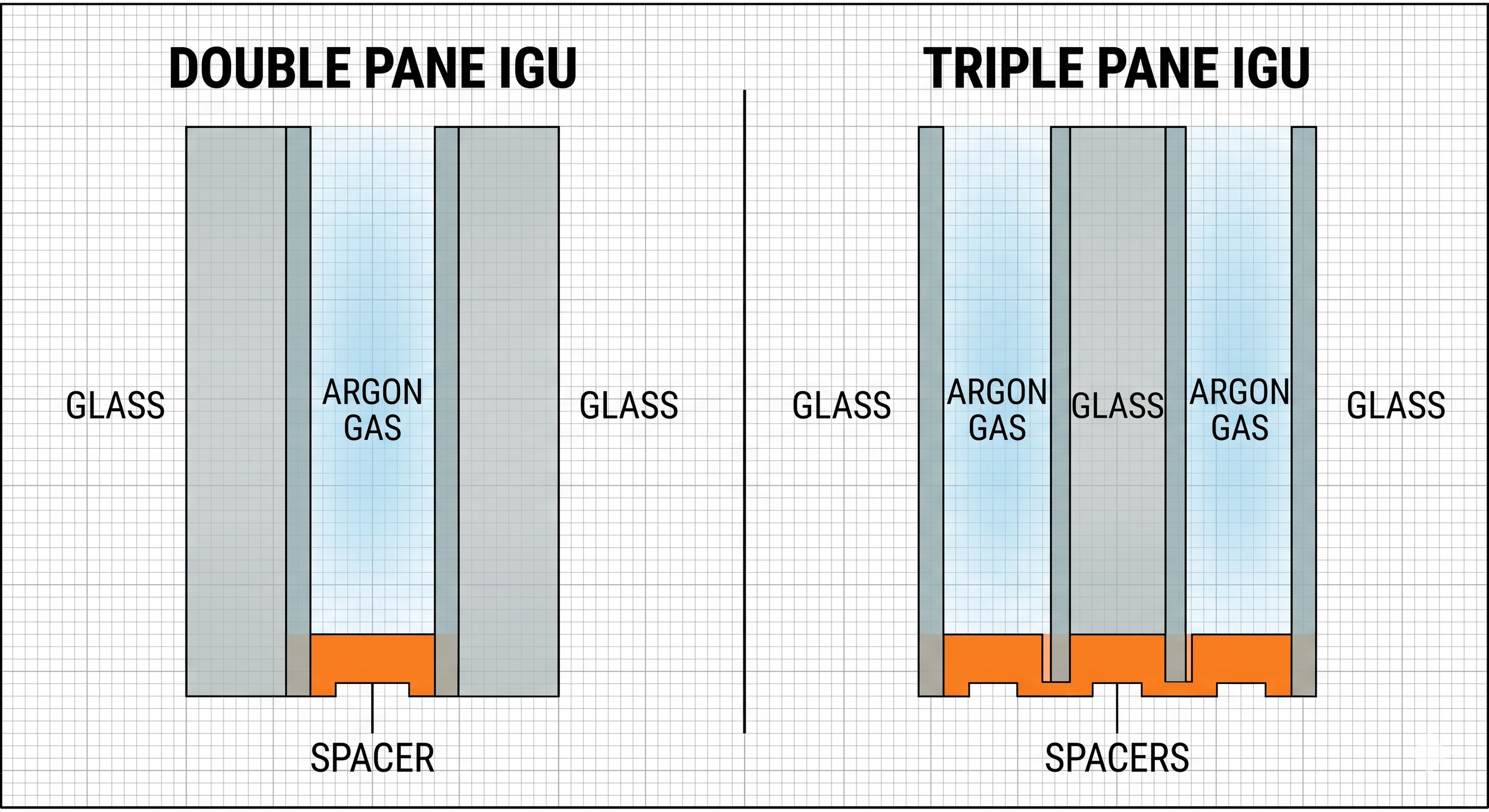
Glass Panes: Double-pane windows use two sheets of glass to create a single insulating pocket. Triple-pane windows add a third sheet, creating two separate protective barriers.
Low-E Coatings: Low-Emissivity (Low-E) coating is an invisible metallic layer applied to the glass that acts like a thermal mirror - reflecting furnace heat back inside during winter and blocking outdoor solar heat in the summer.
Gas Fills: Heavy, inert argon gas is sealed between the panes. Because argon is much denser than regular air, it drastically slows down thermal transfer.
Warm-Edge Spacers: The structural seals that keep the panes precisely separated. Modern units use non-metallic foam spacers rather than conductive aluminum to prevent cold spots and edge condensation.
2. Double Pane vs. Triple Pane: The Real Hard Data
To evaluate whether upgrading is truly worthwhile, look at the concrete metrics that describe window performance.
U-Factor: Measures the overall rate of heat loss through the entire window assembly. Lower numbers mean better insulation.
R-Value: Measures a material's resistance to heat flow. Higher numbers mean better insulation.
Energy Rating (ER): A holistic Canadian metric balancing the U-factor, air leakage, and passive solar heat gain. Higher numbers are more efficient.
| Metric | Premium Double Pane (Low-E + Argon) |
High-Performance Triple Pane |
Performance Improvement |
|---|---|---|---|
| Average U-Factor | 0.28 to 0.32 | 0.16 to 0.22 | 30% to 40% reduction in heat loss |
| Center-of-Glass R-Value | ~R-3 to R-4 | ~R-6 to R-8 | Up to double the thermal resistance |
| Typical Price Premium | Base Cost | +10% to 15% per unit | — |
3. The Waterloo Region Reality Check: What Do You Actually Need?
A generic online article written for a homeowner in mild coastal British Columbia or the deep southern United States won't accurately reflect what is necessary for a home in Kitchener, Waterloo, Cambridge, or Guelph.
Southwestern Ontario sits firmly within an aggressive heating climate zone, requiring your furnace to run for roughly seven months out of the year. At Better Windows & Doors, we’ve seen firsthand how the right installation can completely change how a home feels.
When deciding if triple pane is worth the 10% to 15% upfront price premium, consider three main real-world benefits.
The "Touch Test" and Daily Comfort
Have you ever sat near a double-pane window in January and felt an immediate chill? That isn't always an air leak - it is often a phenomenon where your body heat radiates directly onto the freezing cold surface of the glass.
When it drops to -20°C out on Hespeler Road, the interior glass sheet of a standard double-pane window will typically hover around 12°C. A high-performance triple-pane system keeps that exact same interior glass surface closer to 18°C. This eliminates drafts and allows you to place couches, desks, or dining tables right against exterior walls without feeling a chill.
Structural Condensation Protection
Interior condensation forms when warm, humid indoor air comes into contact with a cold surface that sits below the dew point. In older double-pane units, moisture frequently forms a strip along the bottom edge when outdoor temperatures dip below -15°C.
In severe cold snaps, this moisture freezes into frost, which melts and risks rotting wood trim or damaging drywall.
Because the interior glass of a triple-pane unit stays significantly warmer, condensation is structurally mitigated and rarely forms until outdoor temperatures plunge below -30°C.
Sound Dampening along High-Traffic Corridors
While an extra pane of glass helps quiet an interior space, a common industry secret is that three identical sheets of glass don't completely block out all noise frequencies.
If your home backs onto a busy transit line, the 401, or a noisy commercial zone, look for a triple-pane system that incorporates asymmetrical glazing (using sheets of varying glass thicknesses, such as combining 3mm and 4mm glass).
This variation disrupts a wider range of sound waves, dropping exterior sound by up to 29 decibels and bringing a deep, noticeable hush to your home.
4. Decision Tree: Which Glass Package Fits Your Home?
Use this structural guide to match your home’s layout, orientation, and specific pain points to the ideal choice.
Which Glass Package Fits Your Home?
Ask yourself these quick questions to find your ideal fit.
- Large openings: You have oversized architectural or picture windows.
- Direction matters: The windows face North or Northwest (zero winter sun).
- Comfort priority: You want to eliminate cold drafts and winter condensation.
- Noise issues: Your home is near busy roads like Hespeler or the 401.
- Small openings: For standard bathrooms, basements, or laundry rooms.
- Natural warmth: Windows face South and get plenty of winter sunlight.
- Short-term stay: You plan on moving or selling within the next 2 to 5 years.
- Strict budget: You need to keep initial upfront project costs lower.
Option A: Choose High-Performance Triple Pane
North or Northwest Facing Windows: These locations receive zero passive solar warmth during winter days, making them a home's largest thermal weak points.
Large Architectural Units: Massive picture windows, floor-to-ceiling glass systems, or wide awning windows lose substantial heat due to their high glass-to-wall ratio.
The "Forever Home" Owner: If you plan on staying in your current property for more than 10 years, the compounded energy savings and everyday comfort easily offset the initial upfront cost.
Homes near High-Traffic Areas: Properties bordering main arterial roads or active neighborhood commercial zones benefit immensely from the acoustic barrier.
Option B: Choose Premium Double Pane
Small or Secondary Openings: Small basement windows, laundry rooms, or standard bathroom openings have minimal surface areas and don't experience high thermal loss.
South-Facing Windows with Mature Shade: Southern windows often benefit from passive solar heat gain during cold winter days, helping to offset heat loss naturally.
Tight Budgets / Quick Flips: If you plan on moving within 2 to 5 years, you won't live in the home long enough to realize the full return on investment from energy savings. Premium double-pane options with advanced Low-E coatings will keep the project affordable while still meeting local building codes.
5. The Bottom Line on Glass Upgrades
Upgrading your windows shouldn't be treated as an all-or-nothing financial commitment. A highly effective strategy used by savvy homeowners is to split the order: install high-performance triple pane on large, north-facing picture windows where comfort and heat loss are significant issues, and choose premium double-pane units for smaller, south-facing windows.
Because glass packages are heavily tied to the total cost of installation, it is helpful to reference a comprehensive Window Replacement Pricing Guide to see exactly how a 12% glass premium affects your overall project budget.
Investing your dollars where they will have the most significant impact on your home's thermal envelope ensures your living space remains comfortable, quiet, and highly efficient for decades to come.

Ready for a Warmer Winter in Waterloo Region?
Stop dealing with drafty rooms and wet window sills. Whether premium double pane fits your budget or high-performance triple pane fits your forever home, we’ll help you design the perfect energy envelope for your space.
Check out our Window Replacement Pricing Guide to compare exact costs, or contact the team at Better Windows & Doors today to book your hassle-free in-home consultation.
“We recently purchased and had installed 2 windows. The employees we worked with were very friendly and helpful.
The installers did a great job and left everything clean and tidy when they were finished.”